Thorin and Company
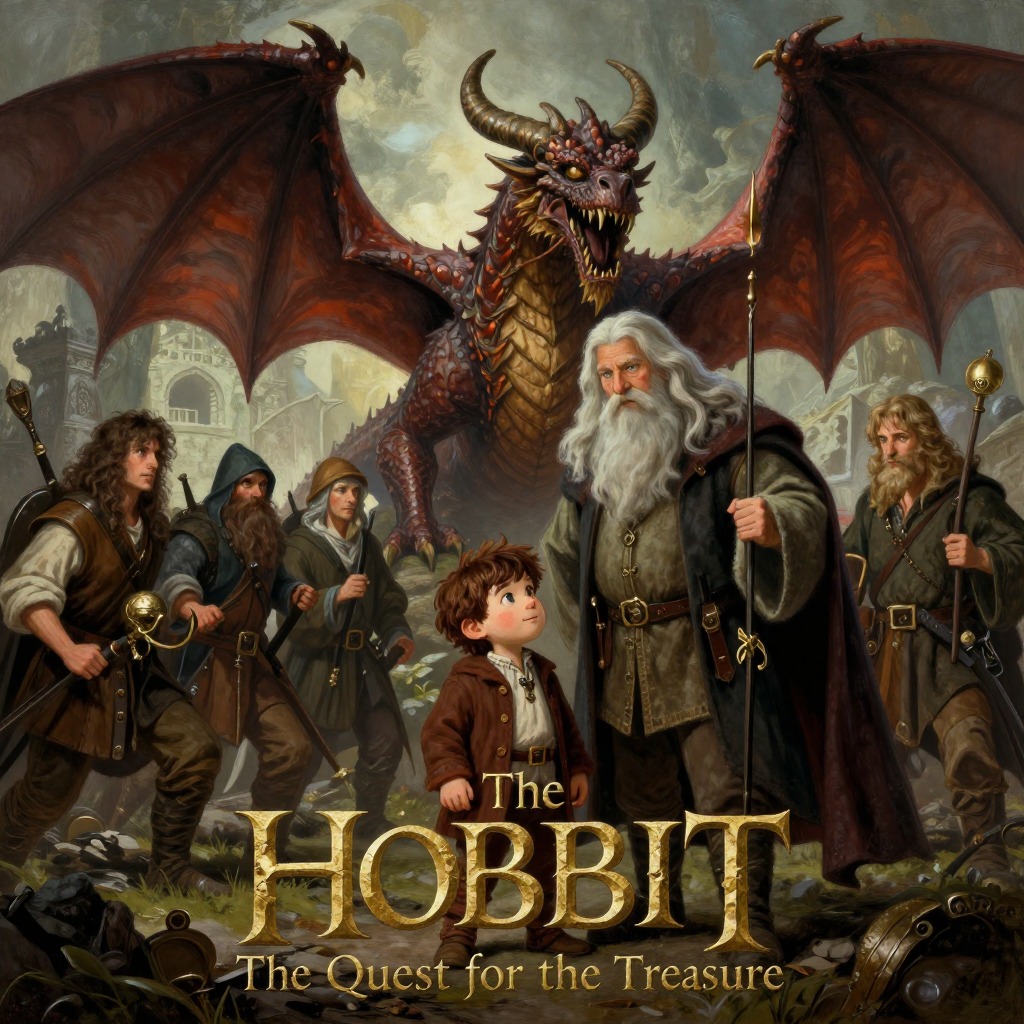
Thorin and Company is the expedition of thirteen dwarves led by Thorin Oakenshield, with the hobbit Bilbo Baggins as their burglar and the wizard Gandalf as their counselor, formed to reclaim the lost treasure of the Lonely Mountain from the dragon Smaug. The Company's journey from the Shire to the Mountain and back constitutes the entire plot of The Hobbit, and its members' fates—ranging from death in battle to the restoration of the Kingdom under the Mountain—define the story's resolution.
Formation and Composition
The Company was assembled by Gandalf, who chose Bilbo Baggins as the fourteenth member after failing to find a warrior or hero for the task. The thirteen dwarves were Thorin Oakenshield, Dwalin, Balin, Kili, Fili, Dori, Nori, Ori, Oin, Gloin, Bifur, Bofur, and Bombur. They gathered at Bilbo's hobbit-hole, Bag-End, on an April Wednesday for what Bilbo called an "Unexpected Party." Thorin was the leader, an enormously important dwarf and the grandson of Thror, the former King under the Mountain. The Company's formal name appears in the contract they left for Bilbo, signed "Thorin & Co.," which offered him a one-fourteenth share of profits, travel expenses, and funeral costs. The dwarves were armed with tools and spades, and each carried a hooded cloak of a distinctive color: Dwalin's was dark-green, Balin's scarlet, Kili and Fili's blue, and Thorin's sky-blue with a long silver tassel.
Quest and Objectives
The Company's goal was to travel east to the Lonely Mountain, enter through a secret side-door, and recover the vast treasure that Smaug had stolen from the dwarves generations earlier. The treasure included the Arkenstone, the Heart of the Mountain, a great white gem of incalculable value. The dwarves were motivated by revenge against Smaug and the desire to restore their ancient kingdom. Thorin explained that his grandfather Thror had been King under the Mountain, and that Smaug had destroyed Dale and driven the dwarves out, killing most of them. The few survivors, including Thorin, had been forced to earn their living as blacksmiths or coal miners. The Company's journey took them through the Lone-lands, over the Misty Mountains, across Mirkwood, and down the Forest River to Lake-town, before finally reaching the Mountain.
Key Actions and Perils
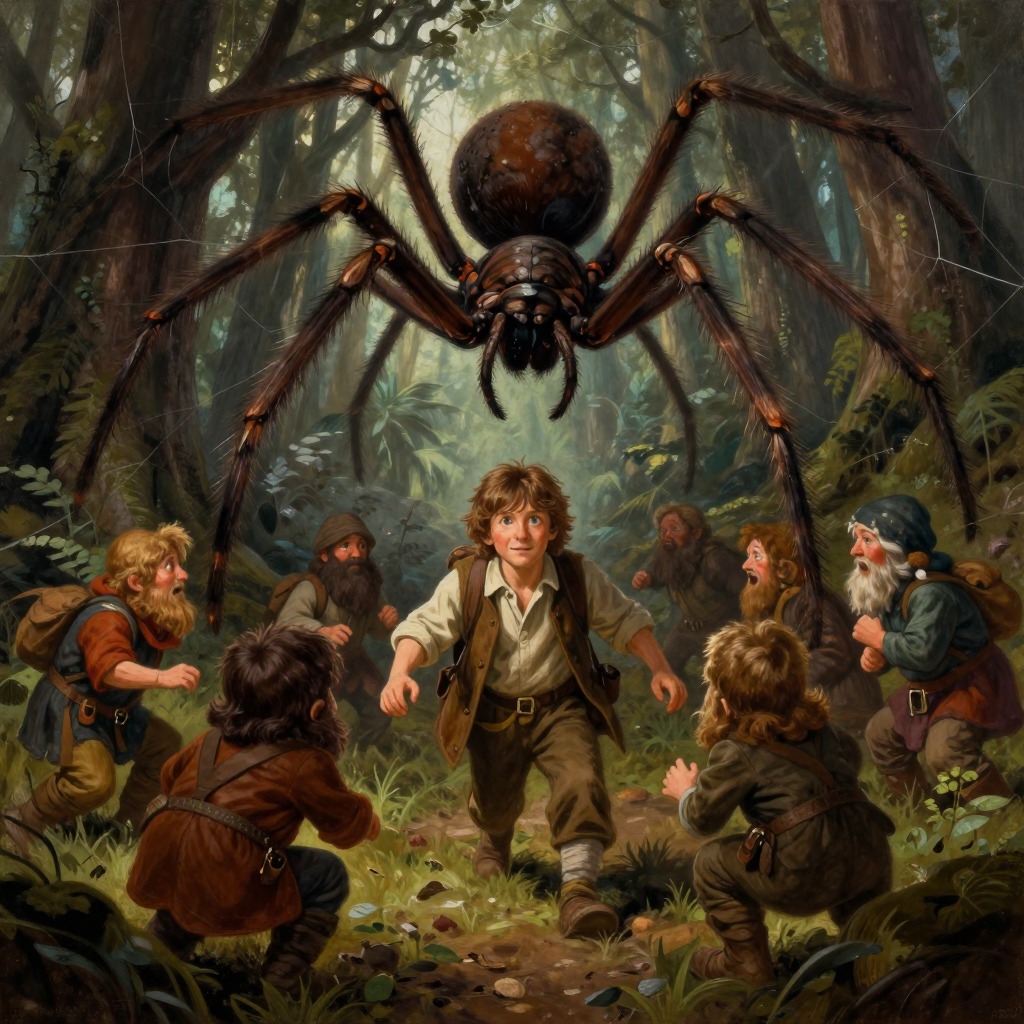
The Company faced numerous dangers. They were captured by trolls and rescued by Gandalf, who tricked the trolls into staying above ground until dawn turned them to stone. In the Misty Mountains, they were taken by goblins; Gandalf killed the Great Goblin, and in the ensuing escape, Bilbo was separated and found the One Ring. After reuniting, the Company was attacked by Wargs and rescued by the Great Eagles of the Misty Mountains. They stayed with Beorn, a skin-changer, who provided them with ponies and supplies. In Mirkwood, they were ensnared by giant spiders; Bilbo, using the Ring, freed the dwarves and named his sword Sting. They were then captured by Wood-elves and imprisoned in the Elvenking's halls. Bilbo orchestrated their escape by hiding them in empty wine barrels that floated down the Forest River to Lake-town. At Lake-town, Thorin declared himself the returning King under the Mountain, and the townspeople, inspired by old songs, provided them with boats and supplies. After a difficult search, they found the secret door on the western slope of the Mountain and opened it on Durin's Day.
Relationships and Conflict
Internal tensions arose within the Company, particularly regarding Bilbo's role. Early on, Gloin expressed doubts, calling Bilbo "more like a grocer than a burglar." Bilbo proved his worth by rescuing the dwarves from spiders and from the Elvenking's dungeons, earning their respect. However, after Smaug's death, Thorin's obsession with the treasure—especially the Arkenstone—led to conflict. When Bilbo secretly gave the Arkenstone to Bard and the Elvenking to use as a bargaining chip, Thorin denounced him as a traitor and threatened to throw him from the wall. The Company became divided: most dwarves shared Thorin's greed, but Bombur, Fili, and Kili were less certain. The arrival of Dain and his five hundred dwarves from the Iron Hills nearly sparked a battle with the Men of Lake-town and the Elves, but the sudden attack of goblins and Wargs united all sides in the Battle of Five Armies.
Change and Ending
The Battle of Five Armies brought the Company's quest to a tragic close. Thorin was mortally wounded; Fili and Kili died defending him, for they were his sister-sons. The remaining ten dwarves—Balin, Dwalin, Dori, Nori, Ori, Oin, Gloin, Bifur, Bofur, and Bombur—survived and remained with Dain, who became the new King under the Mountain. Dain honored the old agreement and gave a fourteenth share of the treasure to Bard. Bilbo accepted only two small chests of gold and silver, enough for one pony to carry. The Company's adventure transformed Bilbo: he returned home to find himself presumed dead and his belongings being auctioned, but he remained content, writing poetry, visiting elves, and keeping the Ring a secret. He was no longer considered respectable by his neighbors, but he was happy, and his life was extraordinarily long.
Narrative Role and Significance
Thorin and Company functions as the collective protagonist of the quest narrative, embodying the dwarvish values of craftsmanship, loyalty, and the lust for gold. Their journey follows the classic hero's journey pattern, with Bilbo as the unlikely hero who grows into his role. The Company's internal dynamics—the tension between Thorin's pride and Bilbo's pragmatism, the loyalty of Fili and Kili, the grumbling of Bombur—create a varied and believable group. Their ultimate fate, with Thorin's death and Dain's succession, underscores the theme that treasure, while desired, can corrupt and destroy. The Company's adventure also serves as a prelude to The Lord of the Rings, introducing the Ring, Gollum, and the broader conflicts of Middle-earth.